The ultimate DTC logistics strategy: how top brands use fulfillment to thrive
Customer acquisition costs for DTC brands have risen 60% in five years. European e-commerce reached 842 billion euros in revenue in 2024. Fulfillment speed, return rates and inventory accuracy now decide which brands make it. Here's how logistics becomes a competitive advantage.

Key takeaways
- Customer acquisition costs have risen 60% in five years, which makes first-order profitability the exception rather than the rule.
- 84% of UK shoppers won't return to a store after a bad returns experience (Klarna), which makes fulfillment accuracy a direct driver of retention.
- The sustainable DTC benchmark is an LTV/CAC ratio of 3:1. Operational efficiency is now the main way to hold it.
- Professional 3PL partners typically deliver order accuracy above 99.8% and cut delivery time by two to three days.
- 55% of e-commerce businesses plan to outsource more to 3PLs, which shows where the sector is heading.
The DTC boom was never meant to feel like this. A solid DTC logistics strategy used to be an afterthought, something you'd optimise later once growth was under way. That's no longer the case. Customer acquisition costs have risen 60% over the past five years, digital advertising has become structurally more expensive on every major platform, and there's no sign of these trends reversing. European e-commerce reached €842 billion in 2024, up 7% year on year, but behind that figure lies a profitability crisis quietly spreading through the sector. The brands still holding on aren't the ones with the biggest ad budgets. They're the ones that have realised fulfillment isn't a back-office task. It's a competitive advantage.
For many DTC businesses the back end has become the single biggest financial factor. Strong marketing teams still matter, but they can't save a business that can't keep inventory moving, can't absorb returns without margin dropping, or can't turn a new customer into a returning one without spending another $200 to do it.
What is a DTC logistics strategy? A DTC logistics strategy is the operational system a direct-to-consumer brand uses to move inventory from supplier to customer, and how well that system protects margin at every step. It covers storage, order fulfillment, retourverwerking and last-mile delivery. In a high-CAC environment, each of those decisions directly affects contribution margin, payback period and customer lifetime value.
The capital reset
The DTC playbook was written for a different world. Capital was cheap, customer acquisition seemed like the only problem worth solving, and you could raise money, buy traffic, ship products and work out the profit part later. That's no longer a tenable argument.
Investors have pulled back sharply. Equity is no longer the obvious growth engine it once was, and many consumer brands have had to pivot to revenue-based financing, asset-backed lending and whatever internal cash flow they can generate. Operational discipline, not hype, is what keeps most brands solvent.
Why customer acquisition costs changed everything
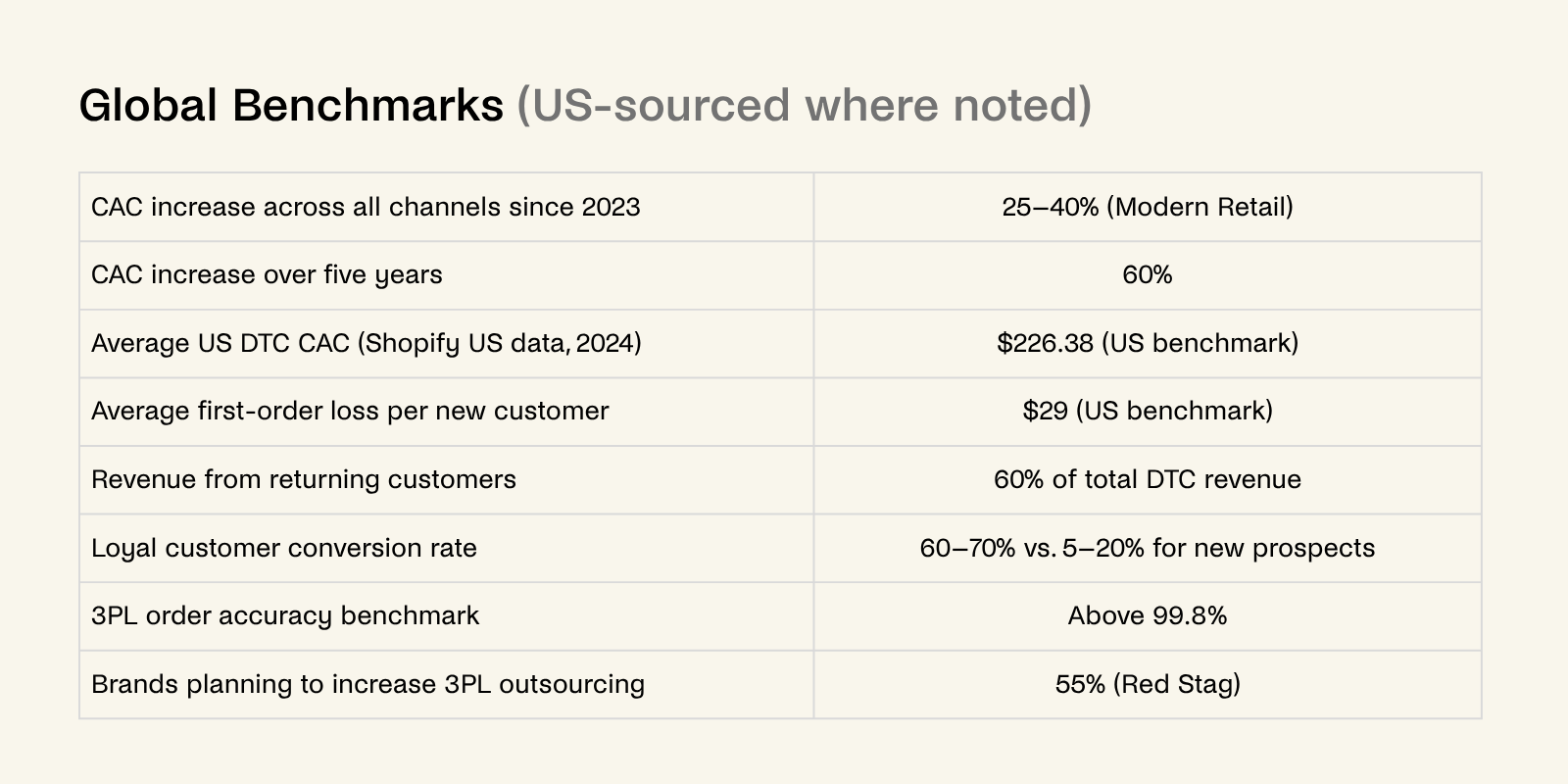
The numbers no longer add up. According to Modern Retail's DTC Briefing acquisition costs across all channels have risen an estimated 25 to 40% since 2023. The costs per klik (CPC) on Google Shopping jumped 33% in 2025. In the US schat Shopify average retail customer acquisition cost (CAC) in 2024 at $226.38, up 7% on the previous year. Europe-specific CAC figures at that level of detail aren't publicly available, but the cost increase across the platforms is global. If you run paid acquisition through Meta or Google, you're paying considerably more than three years ago, whatever the market.
The upshot is that first-purchase profitability has become the exception, not the rule. US research shows an average loss of 29 dollars per new customer on the first order, and this structural logic applies across every market. That shifts the focus of the entire model towards retention. It's why, according to Rivo's e-commerce retention data, 60% of DTC revenue already comes from returning customers.
A brand that has just paid dearly to acquire a customer can't afford slow shipping, stockouts, damaged goods or a returns process that costs more than it needs to. That's exactly why a direct-to-consumer fulfillment strategy matters more than ever. Every operational misstep erodes the margin on that customer. In a high-CAC environment, logistics isn't just about moving boxes. It protects payback and preserves the value of every order shipped.
What this means for your business: When acquisition costs are high and first-order margins are thin, a single fulfillment problem has real financial consequences. Industry estimates put the cost of processing one return at 20% to 65% of the item's original price, depending on category and condition. In the UK, online return rates average between 20% and 25%, with fashion running at 25% to 40%. Run that across your whole SKU base and the numbers get alarming fast.
What successful DTC brands do differently in order fulfillment
The brands still doing well forecast demand more accurately, store inventory closer to customers and choose e-commercepartners that can scale without locking themselves into fixed costs they can't get out of. They're no longer chasing revenue for revenue's sake. Unit profitability matters more now than ever before.
A few patterns recur among the businesses getting this right. They focus on repeat purchases first, not on acquiring new customers. That makes sense, because loyal customers convert at 60% to 70%, whereas new prospects convert at just 5% to 20%. They've made fulfillment accuracy a priority, because in a high-CAC environment service failures are too expensive to absorb. And they actually use logistics data: to rationalise SKU counts, optimise warehouse placement and tighten replenishment timing.
The result is a business that can grow without needing another funding round to cover underlying operational waste.
Logistics as a competitive advantage for DTC brands
Fulfillment really can be a competitive advantage. It isn't always seen that way, but it can be. Brands that deliver reliably returns smoothly and keep stock consistently available are better placed to retain customers and protect their margins. In categories where product quality across competitors is broadly comparable, the post-purchase experience is ultimately what really sets you apart.
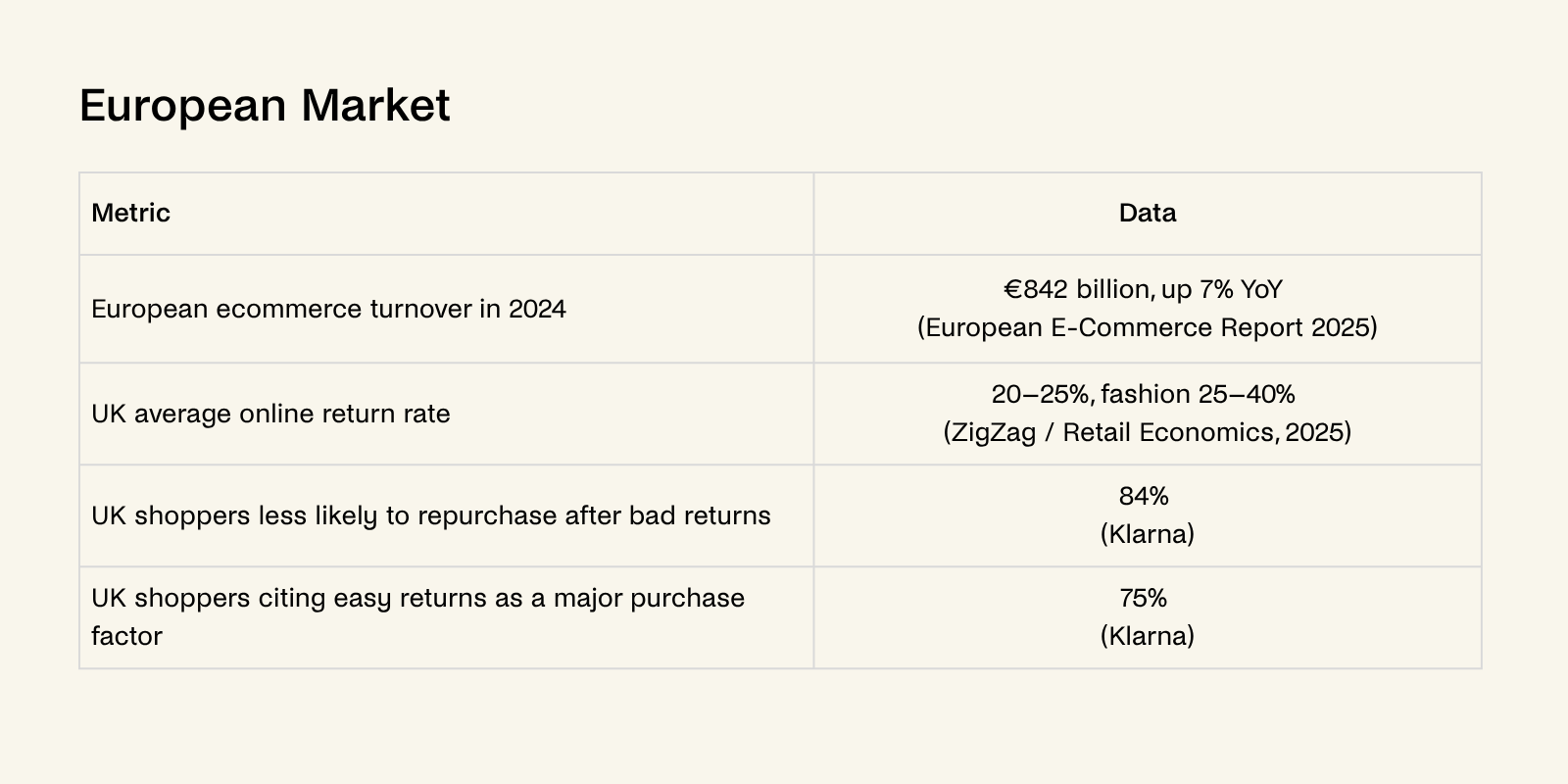
The returns figures speak for themselves. According to Klarna's research into UK returns 84% of shoppers say they won't buy from a store again after a bad returns experience. 75% cite easy, free returns as an essential factor when choosing a store. Speed, accuracy, smooth returns. These aren't just service perks. They're what keeps customers with you.
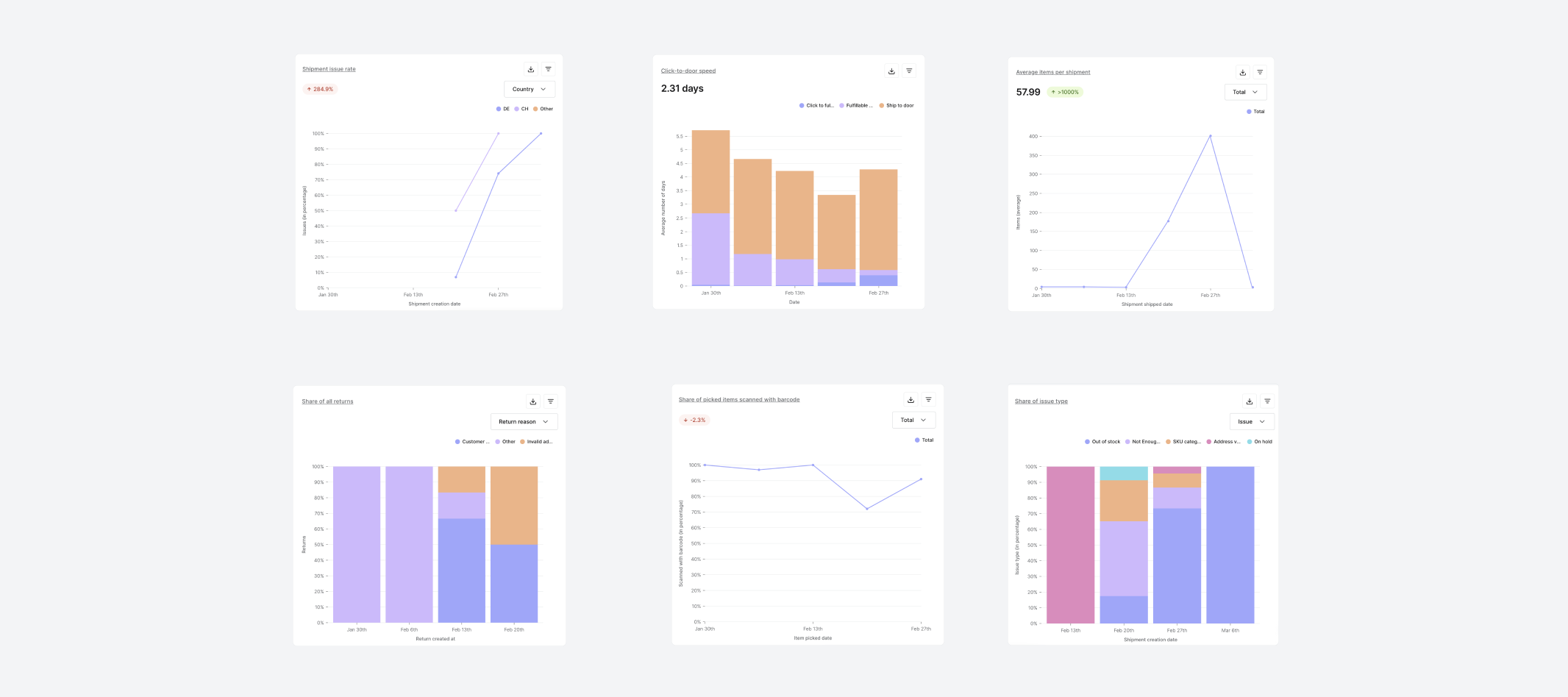
The businesses getting this right use real-time inventory management and fulfillment data to improve cash flow, not just to hit service targets. Faster inventory turnover eases pressure on working capital. Fewer returns protect contribution margin. A smarter warehouse strategy shortens delivery times without driving up costs. Operational excellence is no longer invisible. It has become part of what a brand promises its customers.
The new survival playbook for DTC brands
The brands that come out of this as winners aren't the ones fixated on growth figures. They're the ones with the fundamentals in order: more accurate forecasting, more reliable suppliers, less dead stock and marketing spend that lines up properly with stock levels. They know exactly how long it takes to recover the cost of acquiring a customer, and whether each order contributes actual profit or merely revenue.
This is where the right logistics partner really makes a difference — not just by processing parcels more efficiently, but by helping brands build a cost structure that can absorb higher CAC without needing another funding round to cover it. The industry benchmark for a sustainable DTC business is an LTV/CAC ratio of 3:1. In a tougher market, operational leverage that helps hold that ratio is often worth more than the next funding round.
In-house fulfillment versus 3PL fulfillment: which delivers more profit?
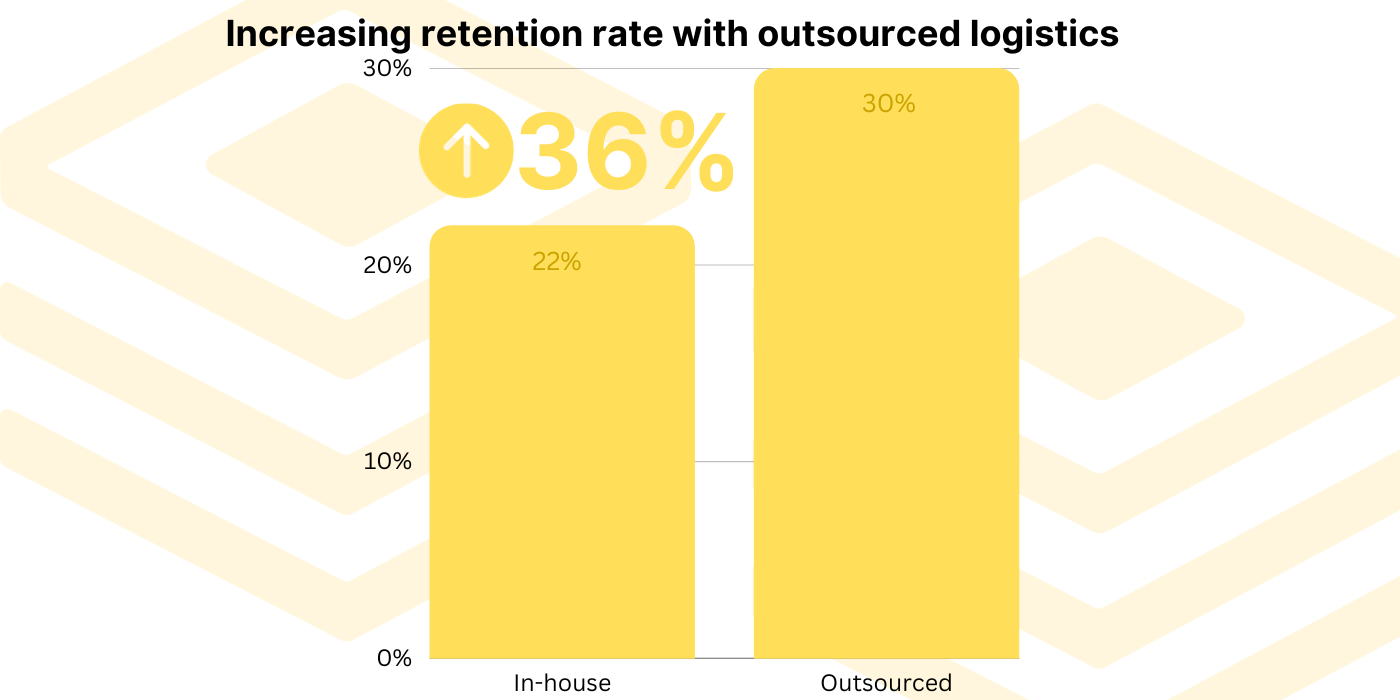
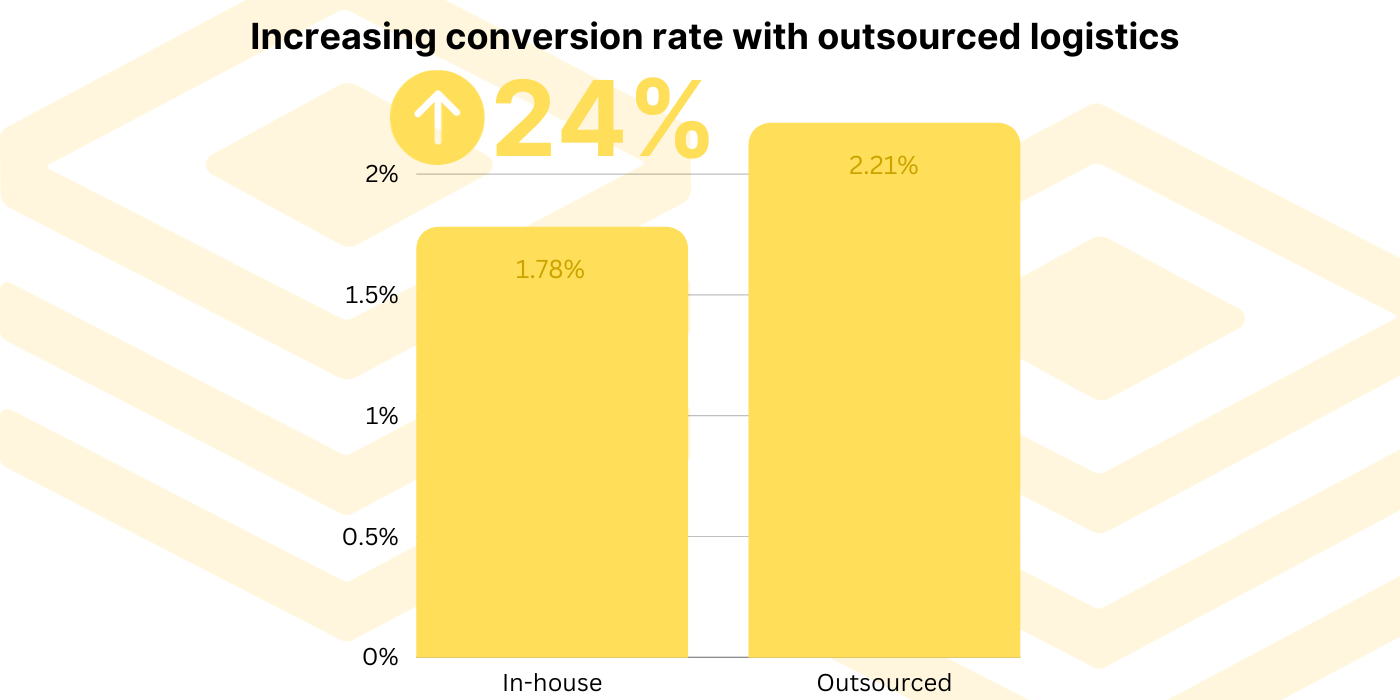
For most emerging DTC brands the real question isn't whether fulfillment matters, but whether you do it yourself or outsource it to a partner. Here's how the two models compare on the points that actually affect your margin.
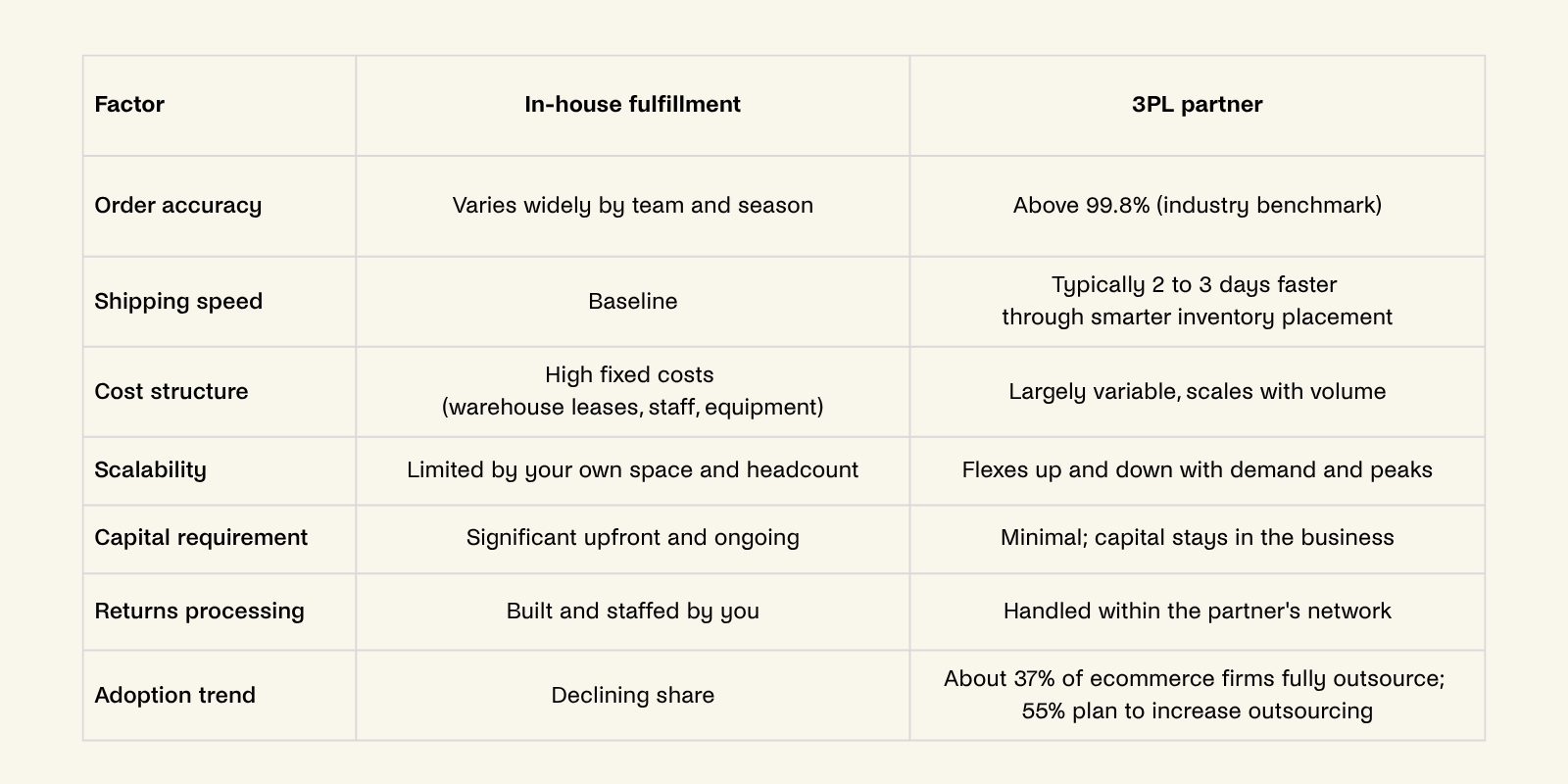
The pattern is always the same: a professional 3PL turns a high-fixed-cost business into a variable-cost one, and that's exactly what protects contribution margin when acquisition costs are high and unpredictable.
How DTC brands can adapt their fulfillment strategy
Begin met een analyse. Verzendkosten, retourpercentages, voorraadomzet, hoe vaak producten uitverkocht raken, uitgesplitst per SKU en per kanaal. Zo krijg je inzicht in waar je de producten het beste kunt opslaan, hoeveel veiligheidsvoorraad je nodig hebt en voor welke producten het de moeite waard is om extra marketing in te zetten.
Channel strategy also deserves a second look. A direct-only model carries real risk when paid acquisition is expensive. Most brands need a more balanced mix: owned channels, wholesale, marketplaces and repeat purchase programmes. Logistics should support that mix, not work against it. The more flexible the supply chain, the more options a brand has when a given channel stops making economic sense.
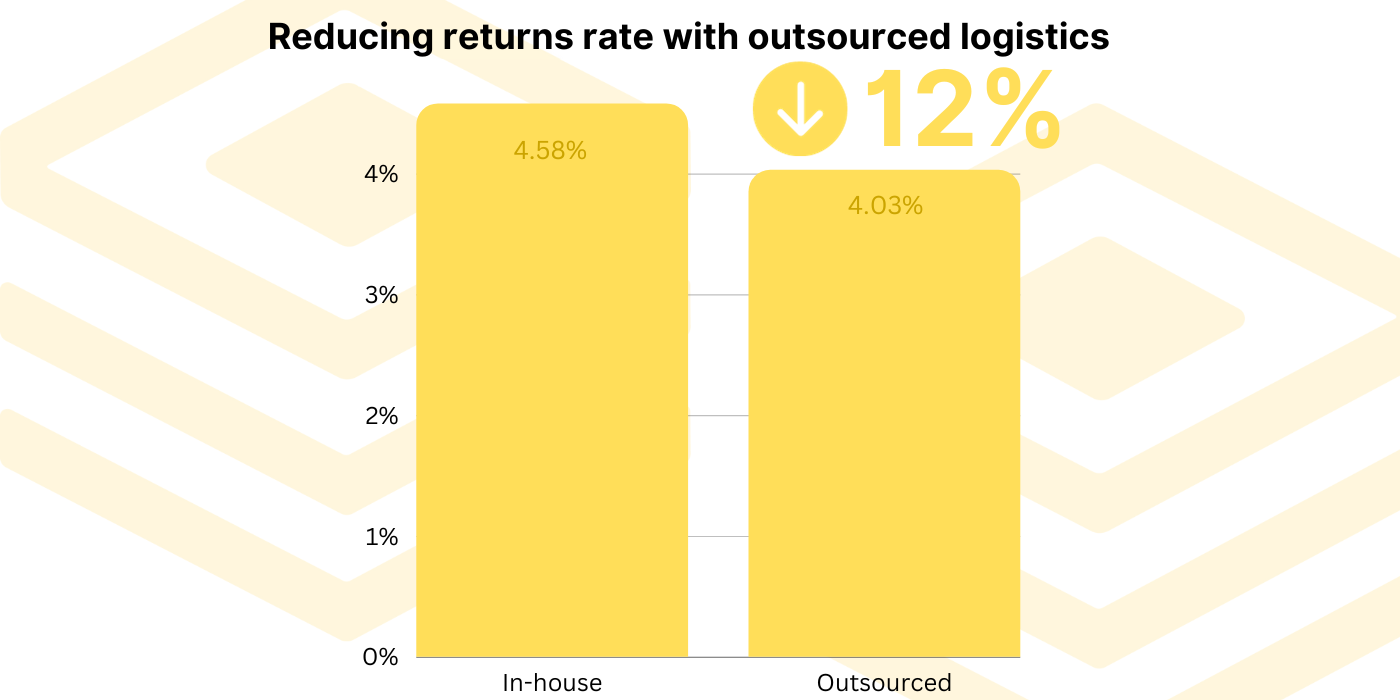
Volgens Red Stag's research into 3PL adoption around 37% of e-commerce businesses outsource order fulfillment for DTC brands entirely to a 3PL, and 55% plan to expand that outsourcing soon. Professional 3PLs typically achieve order accuracy above 99.8%, and delivery times are often two to three days shorter than with in-house fulfillment.
Key statistics: DTC logistics and customer experience in 2025
FAQ: DTC logistics and operational resilience
Why are DTC brands moving away from venture capital funding?
Investors now want a clear path to profit, not just revenue growth, and rising acquisition costs have made capital-intensive brands hard to back. VC funding hasn't disappeared, but it's no longer the default growth engine it once was. Customer acquisition costs have risen 60% in five years, and brands that continually need capital just to cover rising CAC are a difficult sell to institutional investors. Revenue-based lending and asset-backed credit have taken over this role for businesses that can demonstrate operational health.
Why does logistics matter so much for DTC brands right now?
Because when CAC is high, every operational error eats directly into the thin margin you need to recover the cost of acquiring that customer. A fulfillment error, a delayed shipment, a return: each one chips away at your return. According to ZigZag / Retail Economics (2025), average online return rates in the UK run between 20 and 25%, and the industry estimates processing costs per return at 20 to 65% of the item's price. At that scale, logistics accuracy is not a luxury. It determines whether a brand hits its payback period at all.
What makes a brand resilient?
Operational resilience is the combination of tight execution and financial discipline that lets a brand grow without needing another funding round just to stay afloat. In practice that means order accuracy above 99%, low return rates, strong repeat purchase behaviour with an LTV/CAC ratio of at least 3:1, tight inventory management and a capital structure that doesn't depend on the next cash injection.
Is direct-to-consumer still a viable model?
Yes, but not on the same terms as between 2015 and 2021; what's required now is solid unit economics, retention and an operational base matched to today's acquisition costs. According to the European E-Commerce Report 2025, European e-commerce reached 842 billion euros in revenue in 2024, so demand is clearly there. The question is whether brands can build a cost structure to serve it profitably.
How can a 3PL logistics partner improve DTC profitability?
A good 3PL improves your profitability in four concrete ways: lower shipping costs, faster delivery, lower returns handling costs and better inventory and marketing decisions based on fulfillment data. Lower shipping cost per order comes from carrier scale, and faster delivery from smarter inventory placement. Professional 3PLs typically cut delivery time by two to three days and achieve order accuracy above 99.8%. See how SendNet's fulfillment network works.
What is a healthy LTV/CAC ratio for DTC brands?
A ratio of 3:1 or better is the industry standard for a sustainable DTC business. Below 1:1, the model isn't sustainable. Most brands hitting that ratio today do it through retention, not by finding cheaper acquisition channels.
What is a fulfillment competitive advantage?
A fulfillment competitive advantage is the operational edge a brand gains when its logistics are so fast, accurate and cost-efficient that competitors struggle to match the post-purchase experience. Delivery speed, easy returns, consistent stock availability and the data infrastructure that keeps all three reliable at scale — that's what the advantage actually consists of.
In closing: who survives the next phase of DTC?
The next phase of DTC won't be won by whoever raises the most money. It'll be won by whoever operates most efficiently. For logistics companies that's a clear opportunity: help brands turn order fulfillment into a margin advantage and you're not just a supplier. You play a part in their survival.
If you see order fulfillment as a cost centre, competing gets harder every quarter. Treat it as a strategic asset and you can absorb higher acquisition costs, create a post-purchase experience that drives repeat purchases, and grow without burning capital on avoidable errors. In 2026 that's what it all comes down to.
Over SendNet: SendNet is a fulfillment technology company that helps DTC and e-commerce businesses across the UK and EU build operational resilience through smarter fulfillment, real-time inventory visibility and scalable logistics infrastructure. SendNet has fulfilmentcentra in heel Europa and gives merchants full visibility of their supply chain.