How to scale your e-commerce fulfillment as your brand
Scaling online stores expand their fulfillment by replacing manual processes with integrated, automated systems: a warehouse management system (WMS), a flexible 3PL setup and multi-carrier delivery. The four most important factors are process automation, system integration, a pan-European warehouse network and robust returns processes.

Scaling e-commerce businesses hit the same wall sooner or later: fulfillment has to be rebuilt. E-commercefulfilment covers every step, from warehouse management through picking, packing, shipping and returns. What worked with manual processes early on can't hold up as order volumes rise.
Successful brands reorganise their operations systematically, with integrated, scalable structures, automation and strategic partners. This guide shows how modern DTC brands build their fulfillment so that growth becomes a competitive advantage rather than a risk.
Why fulfillment becomes a bottleneck when you scale
The more orders you handle, the more complex the supply chain becomes. Larger volumes, smaller orders and parallel sales channels turn yesterday's efficient processes into today's bottlenecks. And as if that weren't enough, customer expectations keep rising: fast delivery, transparent tracking and easy returns are now table stakes.
With global e-commerce revenue expected to reach 6.86 trillion dollars in 2025 (Source: Statista Global Retail E-commerce Sales Forecast, 2025), demand for structured, scalable fulfillment keeps rising.
Common bottlenecks and how they're resolved when scaling
- Orderverwerking: from manual fulfillment to automated order and shipping processes
- Verkoopkanalen: From one channel to multi-channel inventory management with real-time sync
- Warehouse capacity: From a single fixed location to a distributed warehouse network
- Verzendstrategie: From a single carrier to dynamic multi-carrier routing
Operational scalability: optimise processes, not just floor space
Operational scalability means handling rising order volumes without quality suffering. The answer is rarely more warehouse space. It's about better workflows.
An efficient fulfillment process has five steps:
- Realtime orderontvangst
- Picking and packing with barcode scanning
- Packing and labelling. This step directly affects the shipping cost per parcel.
- Handover to the carrier
- Returns processing and restocking
Automated pick-and-pack methods, barcode scanning and structured warehouse zones are among the highest-return optimisation measures. Modern fulfillment platforms such as SendNet combine integrated workflows with real-time control to achieve 99.9% fulfillment accuracy across more than 500 European DTC brands.
System integration: the backbone of scalable order fulfillment
System integration is the foundation of any modern fulfillment setup. Store platforms, online marketplaces, ERP systems, WMS and shipping software are connected in real time, merging separate processes into a single data-driven whole.
Newer approaches such as composable commerce let you combine specialist services modularly through APIs. The result is a flexible, future-proof system architecture.
Two architectural approaches compared
- A single source of truth: a central platform holding all fulfillment data. Benefits: high transparency, a uniform data foundation, faster implementation.
- Best-of-Breed-landschap: a combination of specialist tools connected through interfaces. Benefits: maximum flexibility, faster innovation cycles, modular scalability.
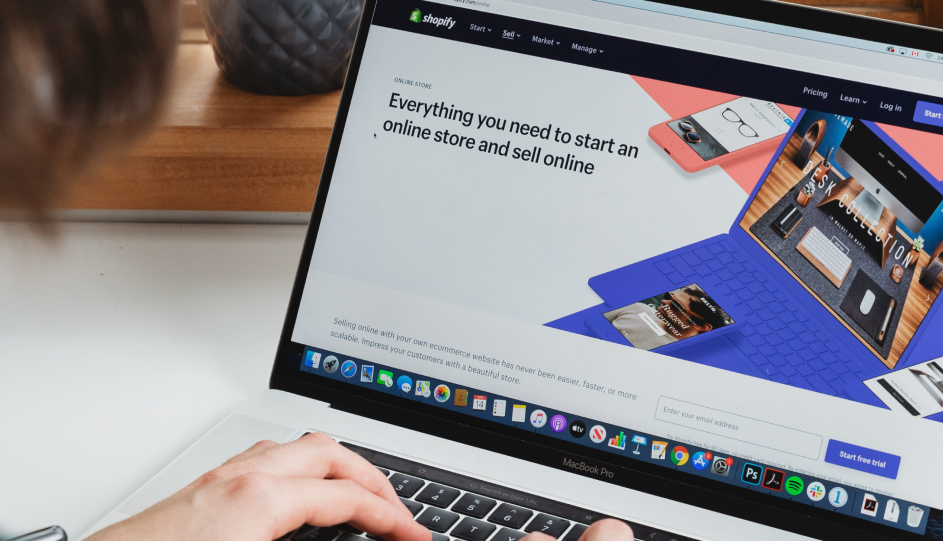
A central control panel brings orders, inventory and shipping data together in a single view, with built-in integrations for Shopify, WooCommerce, Amazon and Xentral. Scaling becomes predictable rather than improvised.
Outsource or do it yourself: which model for which growth stage?
The choice between in-house fulfillment and outsourcing to a 3PL (externe logistieke dienstverlener) depends on order volume, product range and growth plans.
- Dropshipping (<100 orders/month): Low fixed costs, but limited control over the customer experience.
- 3PL (100 to 1,000 orders per month): Scalable, frees up internal capacity, enables rapid international expansion.
- In-house (>1,000 orders/month): Maximum control, but high capital costs and limited geographic reach.
A hybrid model often works well: standard items are handled through a 3PL, while high-margin or limited-edition items stay in-house. For DTC brands handling 10,000 to 100,000 orders a month, this combination offers both flexibility and operational efficiency.
Automation and technology: where the biggest gains are
Automation reduces errors and speeds up throughput. Warehouse management systems (WMS), automated storage and retrieval systems (ASRS) and robotic picking arms keep throughput continuous.
Three technologies with the highest practical return:
- Comparing prices: real-time carrier routing, which according to SendNet customer data can save up to 45% on shipping costs.
- Batch picking with barcode scanning: Batching similar orders makes picking four times faster.
- Voorspellende analyses: Forecasting demand peaks, letting you plan capacity proactively.
The result: lower operating costs, better delivery reliability and higher customer satisfaction. A integrated order and inventory management platform brings all of these technologies together in one place, making them accessible even to brands without their own logistics team.
Resilience and risk management in fulfillment logistics
Resilience means absorbing operational shocks, such as carrier disruptions or demand spikes, without performance suffering. Successful online stores build in redundancy: multiple carriers, alternative routes and contingency capacity spread across several warehouses.
Three recommended steps:
- Use several shipping partners per region, for example through a Carrier with access to more than 200 delivery options
- Adjust shipping options dynamically when carriers can't cope or run late
- Standardise returns with transparent, digital self-service workflows
This kind of risk management brings operational stability and strengthens customer trust. During seasonal peaks or carrier disruptions, that becomes the decisive advantage.
The post-purchase experience: the underrated growth driver
The shopping experience doesn't end at checkout. Fast delivery, accurate tracking and easy returns are what bring customers back. According to Sendcloud's 2024 delivery study, home delivery remains the preferred delivery method for 62% of European consumers, with wide variation by market (85% in Germany, 65% in France, 81% in the Netherlands) (Source: Sendcloud Survey 2024).
With an integrated tracking and returns portal brands can send automatic status notifications, process returns digitally and measure first-attempt success rates.
The key metrics to watch:
- Delivery time (target: 1 to 2 days in Europe)
- Return rate (industry-dependent, typically 8 to 30%)
- Order processing time
- Order accuracy (benchmark: 99.9%)
Practical tips for fulfillment decision-makers
A future-proof fulfillment strategy rests on five pillars:
- Prioritise middleware and order management systems purpose-built for integration
- Distinguish process steps by SKU and sales channel
- Trial 3PLs for new markets or seasonal peaks
- Build multi-carrier coverage and robust returns flows
- Set up a KPI dashboard covering cycle times, error rates and shipping costs
These steps deliver transparency, scalability and the foundation for sustainable growth.
Where is fulfillment heading over the next few years?
The fulfillment sector is changing fast, driven by technology and ever-rising customer expectations. Four trends stand out:
- Real-time inventory management based on IoT sensors and cloud data
- Lokale logistiek with decentralised micro-hubs for faster delivery
- Robotics and AI for continuous process optimisation
- Mobiele handel, which according to Statista accounted for around 60% of all global B2C e-commerce transactions in 2024 and is still growing (Source: Statista Mobile Commerce Share, 2024)
These changes level the playing field again. Brands using data-driven fulfillment systems on a pan-European fulfillment infrastructure, will make the difference over the long term.
Ready to make fulfillment your biggest growth driver?
SendNet supports more than 500 European DTC brands with Prime-like delivery speed, 99.9% order accuracy and shipping costs up to 45% lower.
Frequently asked questions about scaling e-commerce fulfillment
What does 'fulfillment' mean in e-commerce?
E-commerce fulfillment covers every operational step after checkout: storage, picking, packing, shipping and returns handling. For scaling online stores, a scalable fulfillment setup is essential to absorb rising order volumes without sacrificing quality, delivery speed or customer experience.
When does outsourcing to a 3PL make sense?
Moving to a 3PL (third-party logistics provider) usually makes sense once you have a steady order volume above 100 per month. Above 500 orders a month, the cost and error rate of an in-house setup typically exceed what a specialist partner charges, especially if you're expanding into new markets.
How can you optimise order fulfillment with technology?
The highest-impact measures are an integrated warehouse management system (WMS), automated pick-and-pack with barcode scanning, real-time inventory sync across every sales channel and AI-driven carrier routing. These technologies lower error rates, shorten lead times and make order fulfillment measurably more efficient.
Which metrics matter most for scaling order fulfillment?
The key KPIs are order accuracy (target: 99.9%), delivery speed (1 to 2 days in Europe), return rate, order processing time and cost per shipment. You should also look at first-time-right pick rate and carrier performance, so you can spot bottlenecks early and make scaling decisions based on data.
How does fulfillment stay resilient in uncertain times?
Resilience comes from redundancy: multiple carriers rather than a single shipping partner, decentralised warehouses for contingency capacity, dynamic routing during disruptions and standardised returns processes. A central operations dashboard makes that redundancy manageable and lets you adjust quickly during demand spikes or carrier problems.