The best e-commerce fulfillment companies in Germany (2026): a full comparison
Expanding your operations in Germany. This guide covers the five strongest 3PL partners for DACH and European brands, comparing SendNet, Bigblue, everstox, byrd and Zenfulfillment on network coverage, platform integrations, costs and compliance support. Every insight is checked against 2026 operational data and the latest EU customs rules.
Key takeaways
- Germany is the largest e-commerce market in the European Union, and from a domestic warehouse standard delivery via DHL Paket takes 1 to 2 working days for German customers.
- The five providers most brands shortlist for fulfillment in Germany are SendNet, Bigblue, everstox, byrd and Zenfulfillment. SendNet and Zenfulfillment are based in Berlin, while everstox and byrd fulfill orders through partner warehouses rather than running warehouses themselves.
- German 3PL rates typically sit between 2.50 and 6.50 euros per order for pick, pack and ship, while pallet storage costs between 15 and 30 euros per month. No major provider publishes fixed rates.
- Since 1 July 2026 the EU has levied a flat customs charge of 3 euros per item type on low-value parcels imported from outside the EU. If you ship from stock held in Germany, you avoid that per-parcel cost entirely.
- Store platform support varies by provider in Germany. Local options include Shopware and Xentral alongside Shopify and WooCommerce, and not every 3PL supports them all out of the box.
Why Germany is Europe's logistics hub
German customers have no patience for slow delivery. They shop in the EU's largest e-commerce market, are used to DHL Paket arriving within 1 to 2 working days, and abandon checkout when the delivery promise is vague. If your stock sits in a warehouse in France, Poland or the UK, you are fighting that expectation from behind.
Location does the rest. A warehouse in Germany serves the whole DACH region domestically or near-domestically, and sits a short truck run from the Netherlands, Belgium, France, Austria and Poland. That is why so many brands treat Germany as the hub of their European operations: serve your largest EU market domestically, then expand outwards. In our A guide to e-commerce fulfillment explains the approach in detail.
There is a second reason Germany rewards local operations: regulation. Packaging registration under the VerpackG (the LUCID register), buying behaviour with high return rates and, from July 2026, a new EU customs duty on low-value imports — all of it favours brands that hold stock in country and work with a partner that deals with German rules every day. Marketplaces amplify the effect. Amazon.de, Otto and Zalando all reward fast, reliable domestic delivery, something we cover in depth in our guide to the best online marketplaces in Germany.
How should you evaluate a German fulfillment partner?
Most comparison sites judge providers on four criteria: the accuracy of the delivery promise at checkout, the cost of handling returns, store platform integrations and reach within the EU. Those four are right. In Germany they are not enough, so we add a fifth: compliance support. Below I explain what each criterion means in practice.
- Delivery Promise. What is the cut-off for same-day dispatch, which carriers do they work with, and can they deliver on a 1-to-2-day promise at checkout for German addresses?
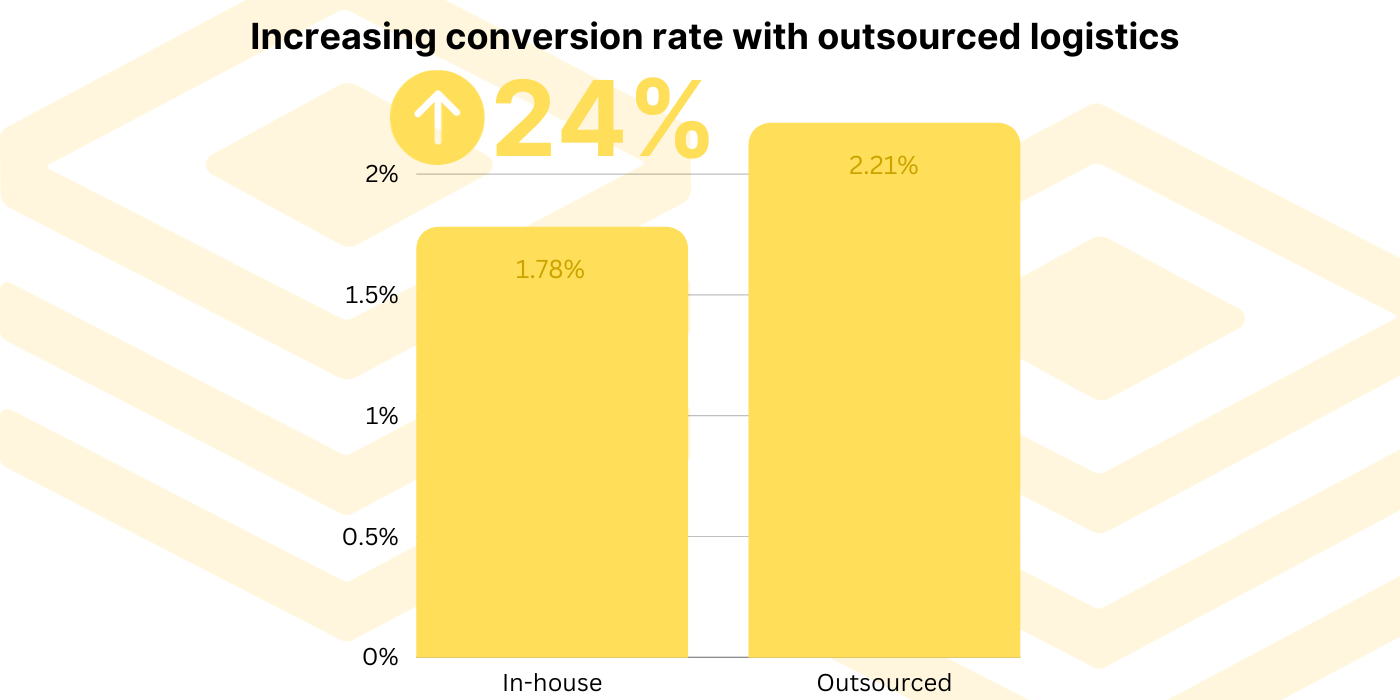
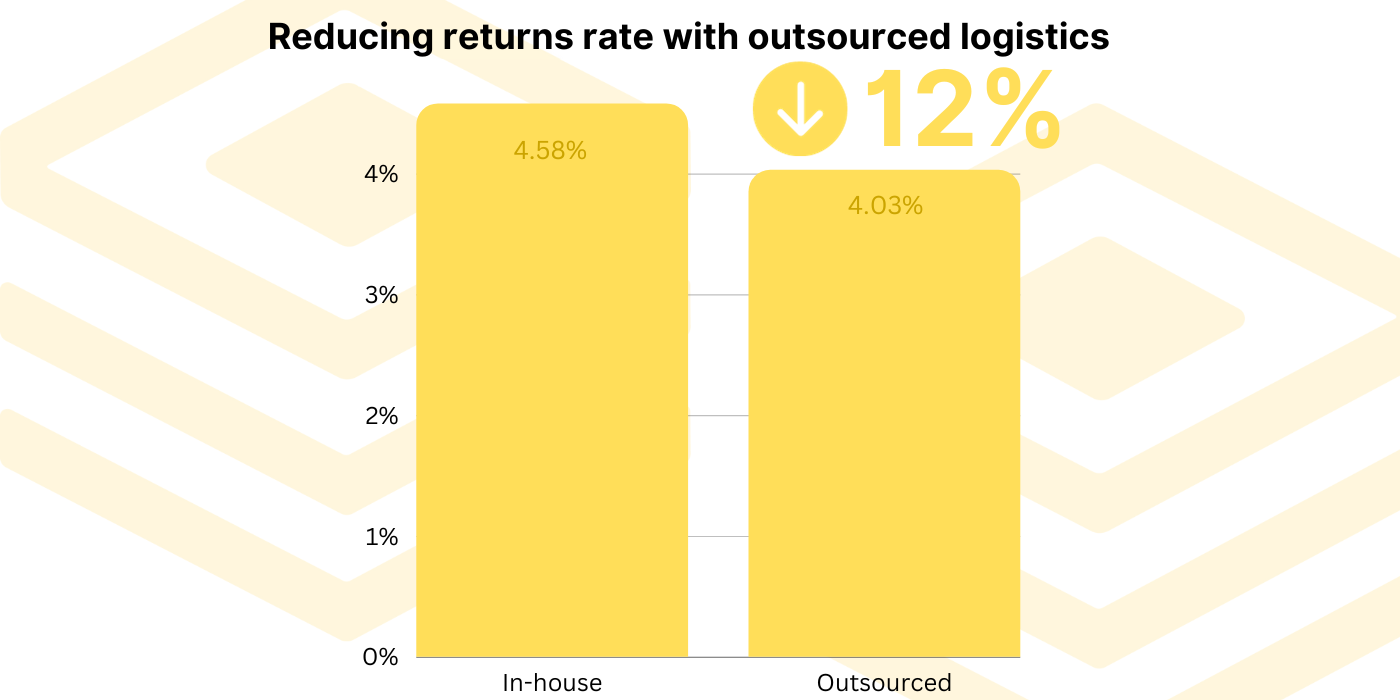
- Returns cost and speed. Return rates in Duitsland are among the highest in Europe, especially in fashion. Ask how quickly returned items get back into sellable stock and what each return costs you. Working with the right partner can improve this figure significantly; see our analysis of reducing returns by working with a 3PL.
- Platformintegraties. In In Germany the landscape is broader than Shopify alone. Shopware and Xentral are core infrastructure for German brands, and WooCommerce is widely used as well. A provider that only supports Shopify will fall short.
- EU reach. Where it says 'Germany first', it rarely means 'Germany only'. Check whether the provider can also give you access to France, Southern Europe and the Nordics from the same integration.
- Compliance support. LUCID registration , customs clearance for non-EU imports and documentation for the EU's 2026 customs changes. This is where providers without deep German roots struggle.
If you're still working out exactly what an external logistics partner handles for you, start with our explanation of what 3PL means for e-commerce, then come back to the comparison.
Comparison of German fulfillment companies (2026)
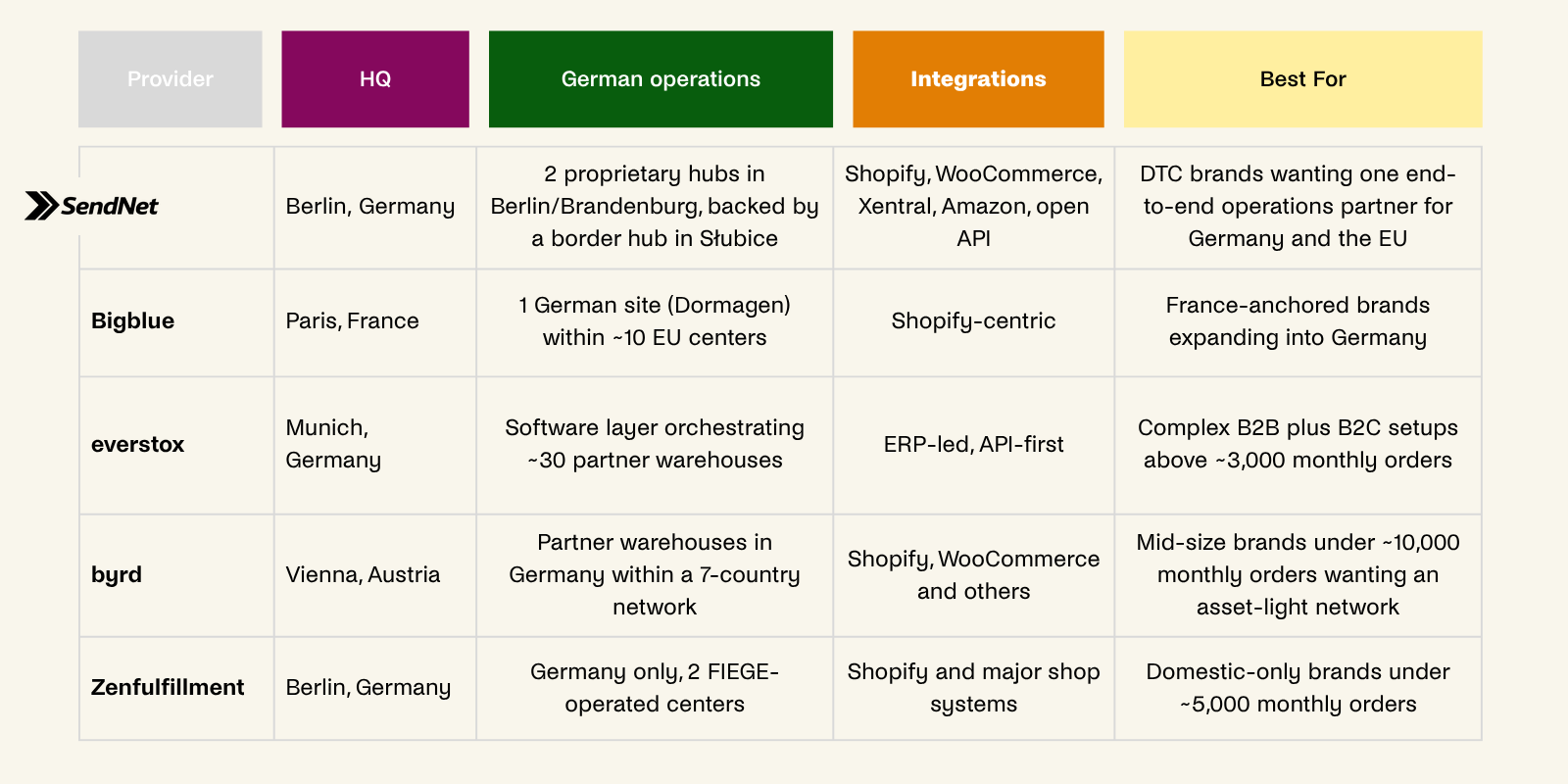
The 5 best e-commerce fulfillment companies in Germany
1. SendNet: the Germany-based operations platform
SendNet was founded in Berlin in 2020 and has grown into an end-to-end operations platform rather than just a warehouse with some software bolted on. Fulfillment sits at the core, and around it SendNet handles freight into Europe, packaging procurement, returns processing and inventory management from a single dashboard. For a brand scaling in Germany that matters: the partner storing your stock also arranges your inbound freight and processes the return that comes back three days later.
The network is built outwards from Germany. With two leading in-house fulfillment centers in the Berlin/Brandenburg metropolitan region (BER2 and BER3 in Rangsdorf) and a connected border hub in Słubice, SendNet offers unmatched operational coverage across the DACH region. The network reaches 95% of Europe within 1 to 2 days, with an exceptional 99.6% pick and pack accuracy.
There are native integrations with Shopify, WooCommerce, Xentral and Amazon, plus an open API and Workato connectors to hook up ERP systems such as Shopware. A good example of how this works at scale: German brands such as Inkster have used SendNet to go from 30 to 1,500 daily shipments overnight, while brands such as Vetevo rely on SendNet's precise returns logistics to cut returns complaints dramatically.
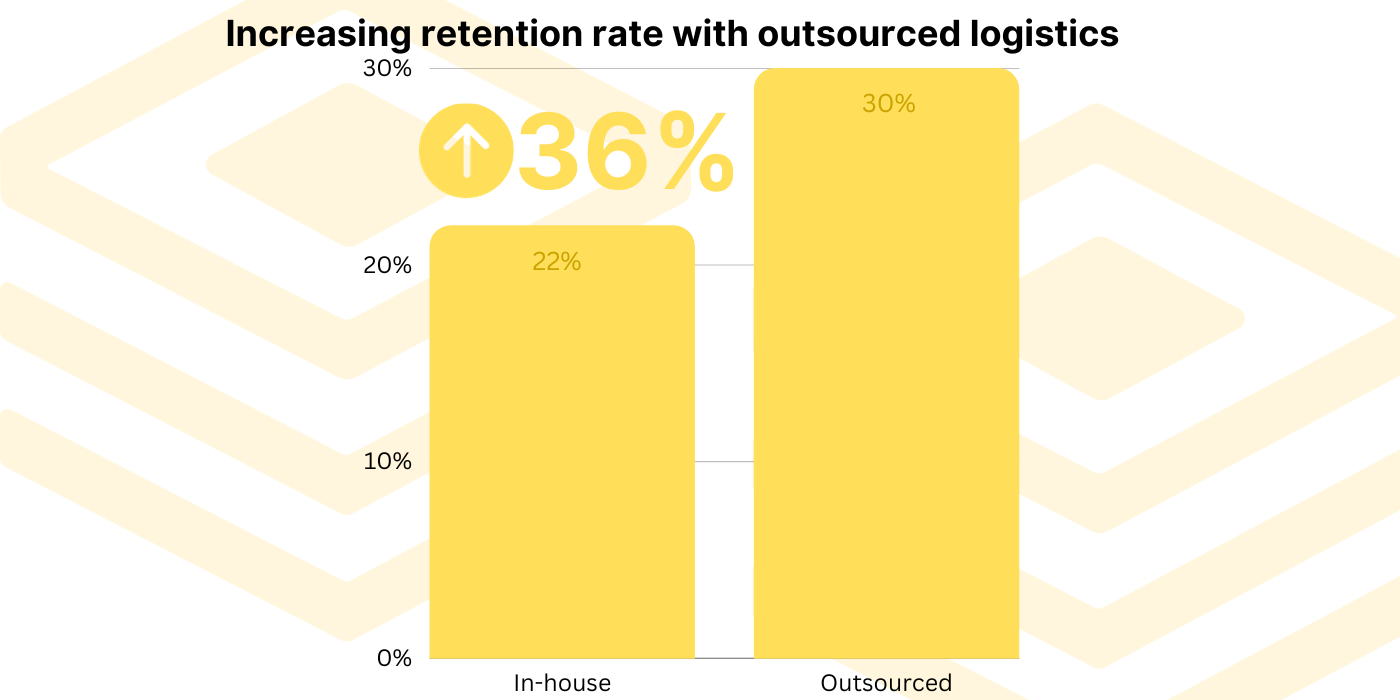
SendNet price reference: By making use of SendNet's smart carrier routing across multiple carriers Domestic carrier routing, merchants save up to 36% on standard shipping costs. A standard 500-gram parcel shipped from the SendNet hub in Berlin to a domestic customer, for example, costs between 3.20 and 4.20 euros all-in (pick, pack and ship), depending on volume.
SendNet is an excellent choice for DTC brands in beauty, supplements, food and lifestyle looking for operational depth, and it holds its own against international players, as you can see in detail in our comparison of Shopify 3PL fulfillment services.
2. Bigblue: powerful software, limited presence in Germany
Bigblue is a Paris-based fulfillment company with its own software stack that customers rate highly, around ten fulfillment centers across Europe and membership of the Shopify Fulfillment Network. For brands based in France or Southern Europe, it is a dependable partner.
The sticking point for a Germany-first brand is coverage. Bigblue's German presence is limited to a single site in Dormagen, and the company views the German market through the lens of a French business treating Germany as expansion territory. If Germany is your primary market rather than your third, the operational depth sits elsewhere.
3. everstox: the coordination layer for complex setups
Munich-based everstox takes a different approach: it owns no warehouses. Instead, the platform connects merchants with around 30 partner distribution centers and more than 15 carriers, through an ERP-driven model suited to brands running both B2B and B2C flows. If you ship 3,000 or more orders a month across multiple channels and countries, this model is well worth a look.
That trade-off is simply built into the model. Your orders are handled by the partner warehouse you are matched with, so fulfillment quality depends on that partner. Switching therefore feels less like fine-tuning a process and more like rebuilding a business relationship from scratch.
4. byrd: an asset-light network across seven countries
byrd, headquartered in Vienna, runs a network of partner warehouses across seven European countries, with German capacity supplied through regional logistics partners. Its strength is flexibility: it distributes stock across the network and promises delivery within 1 to 2 days in Germany, with late carrier cut-offs. For mid-sized brands under roughly 10,000 orders a month this works well.
As with everstox, the model means byrd's control over the warehouse floor is contractual rather than operational. Brands with strict requirements around packaging, kitting or batch tracking should test those workflows before committing.
5. Zenfulfillment: the domestic specialist
Zenfulfillment is based in Berlin and deliberately keeps things narrow: Germany only, through two fulfillment centers run together with FIEGE, one of Germany's established logistics groups. For a brand shipping around 5,000 orders a month entirely within Germany with no near-term plans to cross the border, that focus is a genuine plus.
It becomes a problem as soon as you want to sell into Austria, France or the Netherlands from your local stock. At that point you have to add a second provider and a second integration — exactly the complexity most brands outsource fulfillment to avoid.
What does e-commerce fulfillment cost in Germany?
None of the five providers above publishes a rate card, so any comparison page quoting exact prices for them is guessing. What can be stated reliably are the market ranges German 3PLs operate within, based on published industry benchmarks for 2026.
- Picking and packing: 0.50 to 2.50 euro per item, usually with a fixed administration fee per order on top.
- Full fulfillment (pick, pack and ship): 2.50 to 6.50 euro per order, excluding additional packaging costs.
- Storage: 15 to 30 euro per pallet per month.
- All-in price for a single-item order, including domestic shipping: approximately 4 to 9 euros, depending on the provider, the volume and the carrier.
There are two pricing developments to factor in for 2026. Carrier rates are rising: DHL eCommerce prices went up by an average of 5.9 percent in January 2026, and those increases show up on 3PL invoices. And volume is what makes the difference: most German 3PLs become cost-effective at between 300 and 500 orders per month; below that, in-house fulfillment is usually still cheaper.
How the EU's July 2026 customs changes affect your fulfillment choice
On 1 July 2026 the EU scrapped the customs duty exemption for imported parcels worth up to 150 euros and replaced it with a flat 3-euro charge per item type for low-value goods arriving from outside the EU. The measure, approved by the Council in December 2025 and finally adopted in February 2026, runs until July 2028. After that, normal customs tariffs apply again via the EU's new customs data hub. The measure applies to merchants registered with the Import One-Stop Shop, which covers around 93 percent of e-commerce imports.
More is coming. From 1 November 2026, product identification codes become mandatory so customs can screen non-compliant goods. The Commission has also proposed an additional handling fee of 2 euros per parcel, which could take effect from November 2026. The direction is clear: shipping individual parcels into the EU from abroad gets more expensive and more bureaucratic with every new rule.
On fulfillment strategy, the conclusion is obvious. A brand that imports stock in bulk into a German warehouse clears customs once, in one consolidated shipment, and every customer order then ships as a domestic parcel: no per-item import duty, no parcel-level product code hassle and no surprise charges on the customer's doorstep. Brands selling cross-border also need to think about where returns land and how stock is rebalanced between EU warehouses; we cover this in our guide to cross-border e-commerce fulfillment. Alongside the customs rules, German rules still apply too: any brand selling packaged goods to German consumers must register in the LUCID packaging register under the VerpackG before it sells a single unit.
Frequently asked questions
What is the best e-commerce fulfillment company in Germany?
For most DTC brands, the best fulfillment company in Germany is one that runs its own German operations and supports the local store platforms, and SendNet scores best on both counts. Which company suits you best , still depends on your profile. everstox suits ERP-heavy setups with B2B flows, byrd suits brands that want an asset-light network across several countries, Zenfulfillment suits domestic volumes, and Bigblue suits brands based in France.
How much does e-commerce fulfillment cost in Germany?
Total fulfillment in Germany typically costs between 2.50 and 6.50 euros per order for pick, pack and ship, with the all-in price for a single-item order sitting between 4 and 9 euros, including domestic shipping. For opslag you pay 15 to 30 euros per pallet per month. Every major provider sets its own rates depending on volume, product profile and packaging requirements.
How fast is e-commerce delivery within Germany?
Standard DHL parcels are delivered within Germany in 1 to 2 working days, and cities such as Berlin, Hamburg and Munich have same-day delivery options. The The delivery promise customers see depends less on the carrier than on your 3PL's cut-off times. A late cut-off combined with next-day carrier collection is what makes a 1-to-2-day promise at checkout realistic.
Do I need a warehouse in Germany to sell to German customers?
Strictly speaking you don't, but fulfilling German orders from a German warehouse is the only reliable way to offer 1-to-2-day delivery and avoid the new EU per-parcel import duty. Shipping from outside the EU now triggers the 3-euro low-value import duty per item type, and shipping from other EU countries costs you one to three extra days in transit. Both cost you revenue at checkout.
What exactly does the EU's 3-euro customs rule involve, and does it affect my brand?
Since 1 July 2026 the EU has levied a flat customs charge of 3 euros per item type on low-value parcels imported from outside the EU. This replaces the old 150-euro exemption. It applies to all brands shipping consumer parcels into the EU from warehouses outside the EU. Brands holding stock inside the EU and shipping within the EU are unaffected at parcel level, because the duty is settled once on bulk import.
What is LUCID and do I need to register?
LUCID is Germany's public packaging register, and any brand selling packaged products to German consumers must register there under the Packaging Act (VerpackG) before it may sell anything. Registration is free but mandatory, and marketplaces are obliged to block sellers without a valid LUCID number. A fulfillment partner with operations in Germany will help you with this during onboarding.
Which store platforms do German fulfillment companies work with?
Shopify and WooCommerce are supported by every major provider, but the German stack also includes Shopware and Xentral, and support for those is what separates Germany-based providers from international ones. If you use Shopware, or plan to run Xentral as your ERP, check for a native integration before signing a contract. Middleware workarounds introduce sync delays exactly where order data needs to move as fast as possible.
From what order volume does outsourcing fulfillment make sense?
Outsourcing to a German 3PL usually only pays off from around 300 to 500 orders per month. If je below that sits , the fixed platform fees and minimum charges usually outweigh the savings. Above that level the balance flips quickly, because a 3PL's carrier rates, baked into the price per order, are better than what a small brand can negotiate on its own.
The bottom line
Germany rewards brands that treat it as a home market. Buyers expect delivery within 1 to 2 days, regulators expect LUCID registration and smooth customs handling, and from July 2026 the EU will actively penalise parcel-by-parcel imports from outside the EU. All of that makes it sensible to hold stock in Germany with a partner that operates locally.
Among the five most frequently shortlisted providers, the structural differences matter more than the marketing. everstox and byrd work through partner warehouses. Bigblue serves Germany from a single site and a French head office. Zenfulfillment stops at the German border. SendNet runs its own operations in Germany, with the broadest coverage of German store platforms and a network that extends across Europe as soon as you're ready for it.
The best fulfillment company in Germany is the one that treats Germany as its home base, not as a delivery territory.